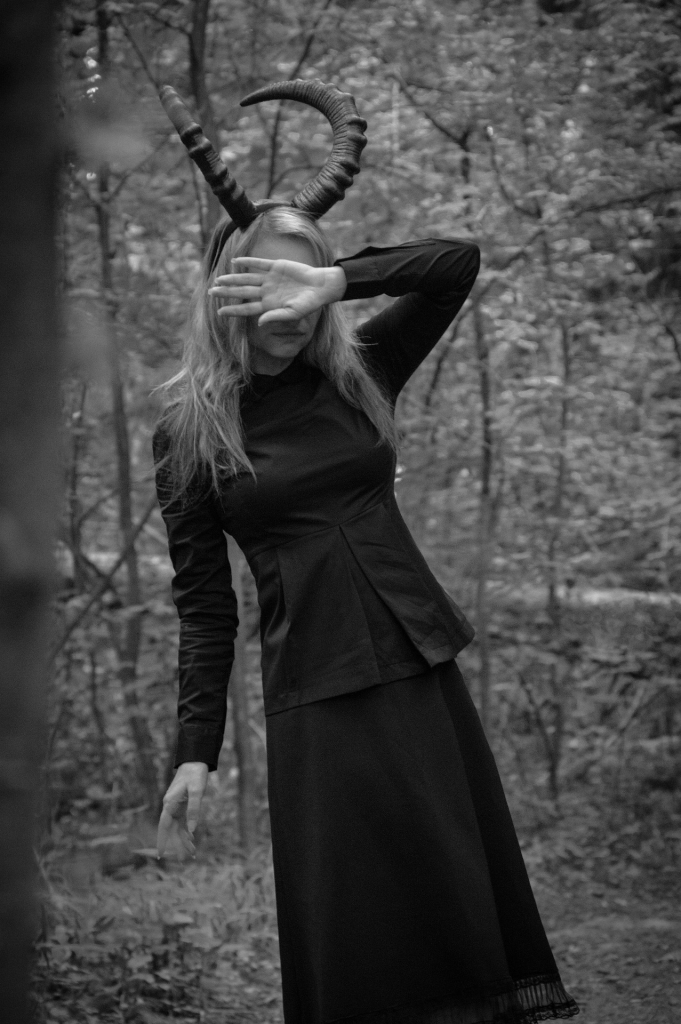
Witch and Daemon: A Short Poem About Forbidden Knowledge, Self-Deception, and the Superiority of a Good Book
There is a particular kind of bargain that only looks like a bargain. A witch wants knowledge that has been forbidden; a daemon explains, with an unsettling number of teeth, that the knowledge is forbidden largely because someone said it was. Twenty years later they meet again, both slightly more tired, and discover that the real trick was never the secret itself. It was the human talent for believing things that are convenient, then blaming the daemon when the convenience runs out.
The poem sits in a long, slightly disreputable tradition. In 1584, Reginald Scot, in *The Discoverie of Witchcraft*, observed that “the fables of witchcraft have taken so fast hold and deep root in the heart of man, that few or none can endure with patience the hand and correction of God.” He was trying to argue that most witchcraft was fraud or delusion. The daemon in the poem would probably have agreed, then charged a consulting fee anyway.
A century and a half later, the anonymous author of *A Treatise on Magic* (c. 1730) noted, more dryly, that “those who seek hidden knowledge most earnestly are often the least prepared to discover that the hiding was done by themselves.” The line is almost never quoted. It should be. It saves time.
And in 1891, the folklorist Lady Gregory recorded an Irish storyteller who claimed that the fairies (or the devils—he was not particular) “will tell you anything you like, so long as you do the believing for them.” The witch in the poem eventually asks to stop knowing things that are not true. The daemon’s response is not triumphant. He is mostly annoyed that she did not figure it out sooner.
None of these older voices solve the problem. They simply notice, as the poem does, that the forbidden thing is rarely as interesting as the machinery we build to keep wanting it. The machinery, at least, can be set down. A book cannot be bargained with, which is why both the witch and the daemon eventually go off to read one. It remains, as the poem observes, a high-percentage move.
________
Spoke the Witch to the smoky Daemon,
the Daemon who sat curled atop a half-dozen symmetrical balls
of yellow-green fire,
“I want to know things forbidden to humans.”
The Daemon smiled, or perhaps grinned; he had enough
teeth
to make one split the difference.
“But Demons are only in tales. If you don’t tell of me, I won’t exist; and if you tell the tell, everyone will want to know the secret. You have wasted your wish.”
Said the Witch,
“But all we need do is pretend the knowledge is real. We simply say that the knowledge is forbidden, and that you told me, and then all we need is meaning.”
Said the Demon,
“So you also feel we’re being watched?”
“Or read,” she said.
“All right,” said the Demon.
Then he told her a strange, dark, terrible secret, and it neither made her happier, nor more fulfilled; she had wasted her wish, but, truth be told, the Demon was tired of foiling humans, or humans foiling themselves. He told himself the next one would be better.
It was not.
For humans had learned to fool themselves better than he could.
The Witch was cunning, and wanted to know forbidden things, in the thought that the truly powerful forbid knowledge because it is part of the route of their strength.
No. There is no one knowledge. But there is assuredly a sea of ignorance.
Did we say the Witch was no happier?
Some twenty years later – perhaps now – they met again.
“I wish to stop knowing things that are not true, and that no-one wants to know,” she said. “Whatever you want from me, I will give it to you, to give me that.”
Said the Demon,
“Well, Hellfire. I was hoping you’d outwitted me and come up with something yourself.”
Each shrugged, sighed, muttered a few spells at the air and each other, and went off to read a good book.
This is always a high percentage move.
I think I’ll do that, myself.
_________________
You might enjoy The Book Battle.